Philosophy
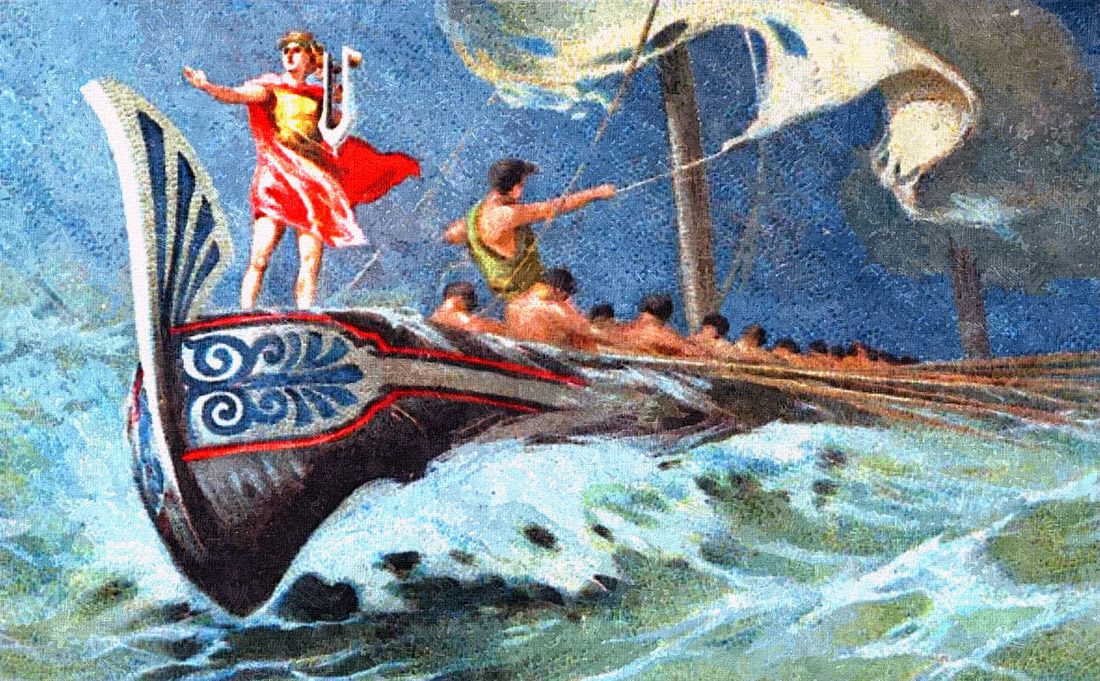
Orpheus Industries is a privately held group of operating companies based in Los Angeles. The name is from a myth: when the Argonauts sailed past the Sirens, it was Orpheus who saved the crew. He didn't resist their song through willpower or restraint. He played his own music, and it was good enough that the crew didn't need to listen to anything else. The market has its own sirens: grow faster, raise capital, optimize for an exit. We play our own song.
On capital Formation
01
Every form of financing encodes an assumption about the shape a business should take. Debt assumes stability. Public equity assumes legibility. Venture capital assumes exponential growth within a compressed time horizon. None of these are wrong in the abstract, but each one, once accepted, becomes the dominant constraint on every subsequent decision. The capital structure is the mold. The business is whatever forms inside it.
We finance our businesses with their own cash flow because we want to choose the shape ourselves. We have no investors and no board. The only obligation encoded in our structure is the obligation to remain useful to our customers. That is a constraint we are comfortable with.
On cash flow as a condition of thought
02
A business that doesn't generate cash flow is a hypothesis being subsidized. That subsidy narrows the range of decisions available, because every choice now has to also service the narrative that justifies the funding. The profitable business doesn't have that problem. It can pursue a direction for three years without explaining it to anyone. It can say no to a large customer. It can be wrong, correct itself quietly, and continue. The loss-making business can do none of these things.
On the nature of the work
03
We approach our work as artisans. While word is often used loosely, its original meaning is precise: a person who makes things with a level of care that exceeds what the market strictly requires. We care about the details, and the work is either done well or it isn't.
Artisans need the freedom to explore. To follow an idea where it leads. To spend time in a direction that can't yet justify itself in a spreadsheet. The financing, the team size, the ownership model: all of it exists to protect that freedom. A company that can't let its people explore has already decided, whether it knows it or not, to converge on the median.
On changing one's mind
04
Most organizations penalize revision. A leader announces a strategy and later abandons it, and the perception is inconsistency. A team pursues a direction for six months and then reverses course, and the perception is wasted time. The opposite is true. The refusal to change one's mind is the sunk-cost fallacy wearing the costume of conviction.
We treat the willingness to reverse a decision, at any point, regardless of what's already been spent, as a core competence. The information changes. Your understanding deepens. The thing you believed last quarter may simply be wrong. We want a culture where saying "I was wrong about this" is easy.
On the relationship between headcount and failure
05
Every person you add to an organization increases the cost of changing direction. That follows directly from communication overhead, institutional memory, and the reality that layoffs are painful. A company with three engineers that discovers it's built the wrong thing can turn in a week. A company with thirty can't turn at all. It can only reframe what it already built as intentional.
We run the smallest teams we can. Where others hire, we write software. Where others coordinate, we eliminate the need for coordination. We want to stay light enough that when we learn something new, we can actually act on it.
On patience as a structural advantage
06
Most participants in our market are structurally prohibited from waiting. Fund cycles impose timelines. Public markets impose quarterly cadences. Career incentives create urgency for individual decision-makers who need visible progress before their next review. This is an observation about a mispricing. There is important work that requires sustained attention over intervals that no one with external obligations can afford. We have no external obligations. We can afford the interval.
On Permanence
07
There is no exit strategy. If the advantage compounds over time, and the craft deepens with practice, and the organizational knowledge gets better every year, then selling the business is the single most value-destructive act available to its owner. It would be equivalent to a library burning its catalog to realize the insurance value of the building. We are building companies that we intend to own and operate indefinitely.
